Marketing Frameworks: 4P, 5P, 7Ps, STP, Segmentation & Modern Digital Strategies
A practical, step-by-step guide for marketers, business owners, and international teams to design customer-centric strategies using classic frameworks (4Ps → 7Ps), STP, the Boston Matrix, and digital marketing tactics to build brand awareness and measurable growth.
Introduction to Modern Marketing Frameworks
Marketing is the engine that connects a product to the right people at the right time. Classic frameworks like the 4Ps and extended models (5P, 7Ps) provide a structured way to design offerings. Meanwhile, modern tools segmentation, STP, and digital channels—help you reach those audiences precisely and scale faster. This guide ties these ideas together into an actionable playbook.

Core Foundations: 4P, 5P & 7Ps
What is the Marketing Mix?
The marketing mix is a set of controllable elements a company uses to influence demand for its product or service. It started as 4 elements and expanded as services, digital channels, and customer experience became central. Below we explain each model and give quick examples you can adapt.
The Traditional 4Ps (Product, Price, Place, Promotion)
- Product: What you sell — features, design, packaging, and variants.
- Price: The amount customers pay — strategy includes discounts, premium pricing, and psychology pricing.
- Place: Distribution channels — online marketplaces, retail, or hybrid models.
- Promotion: How you communicate — ads, PR, content, social media, and influencer outreach.
Quick example: For a health-snack bar: product = organic ingredients; price = premium value pricing; place = e-commerce + specialty stores; promotion = influencer reviews + recipe content.
The 5P Model — Why People Matter
The 5P adds People to represent the human element—sales teams, customer support, and the community around the brand. People are critical for service experiences and trust-building online. Use this for staffing decisions, community management, and talent-driven differentiation.
The 7Ps of Marketing
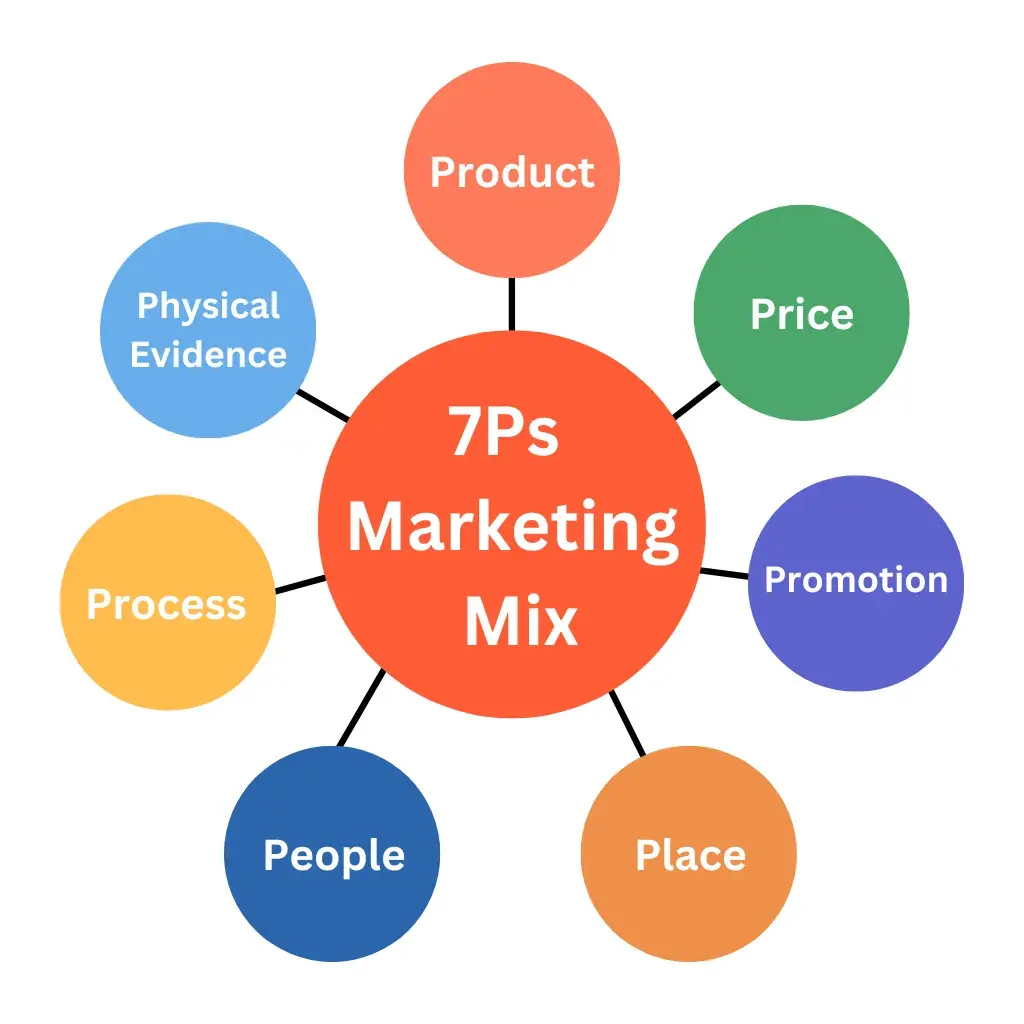
The 7Ps extend the mix with:
- People (teams, customer service)
- Process (operations, fulfillment, customer journey)
- Physical Evidence (packaging, reviews, website design)
This model is especially useful for service businesses (hotels, consultancies, SaaS). Example: In SaaS, "physical evidence" includes a polished UI, onboarding emails, and case studies.

Market Analysis: Tools & Methods
What is Market Analysis?
Market analysis is the process of collecting data on the market size, competitors, customer needs, and trends to inform strategy. A good market analysis reduces risk and defines which segments are worth pursuing. Use a mix of primary (surveys, interviews) and secondary (industry reports, Google Trends) research.
Key Tools & Frameworks
- SWOT – strengths, weaknesses, opportunities, threats.
- PESTLE – political, economic, social, technological, legal, environmental factors.
- Google Trends for demand signals and seasonality.
- Competitor analysis – pricing, positioning, and product gaps.
Tip: combine qualitative interviews with quantitative tools. Numbers tell you "what", conversations tell you "why".
Market & Customer Segmentation
Why Segmentation Matters
Segmentation turns a mass audience into meaningful groups with similar needs. Better segmentation leads to precise messaging, higher conversion rates, and more efficient ad spend.
Types of Segmentation
- Demographic: age, income, gender, education.
- Geographic: country, city, climate.
- Psychographic: values, interests, lifestyle.
- Behavioral: buying patterns, usage, loyalty.
Customer Segmentation vs Market Segmentation
Market segmentation is broader (industry, region), while customer segmentation is granular and actionable for campaigns (e.g., frequent buyers vs new users). Use customer segmentation inside your CRM and ad platforms to personalize messaging.
Target Market Selection
What Is a Target Market?
A target market is the specific group of customers a brand decides to serve. Choosing the right target market guides product features, pricing, and messaging.
Steps to Choose Your Target Market
- List all possible segments from your research.
- Evaluate each segment by size, growth, and profitability.
- Assess accessibility (can you reach them cost-effectively?).
- Run micro-tests (small ad campaigns) to validate response.
Example: A fitness app might choose urban working professionals aged 25–40 who prefer short, at-home workouts—this becomes the primary target market for acquisition campaigns.
STP Marketing Model: Segment, Target, Position
Overview
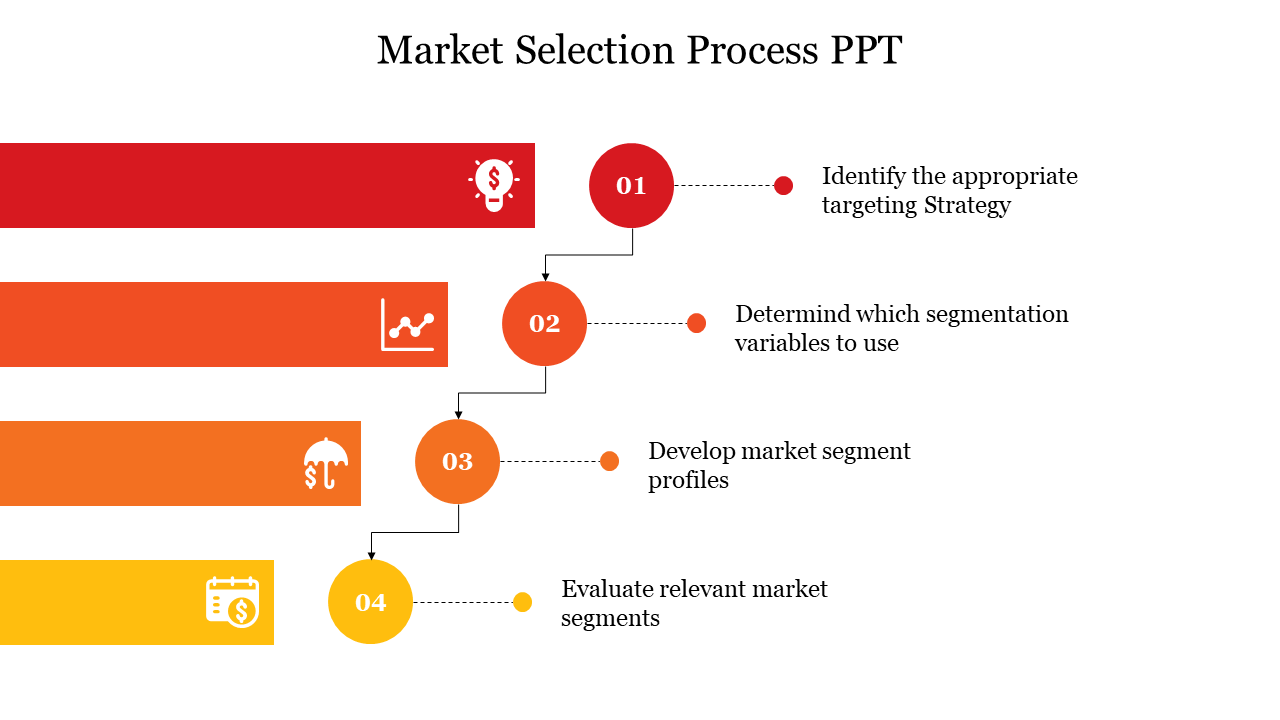
STP is a three-step strategic framework:
- Segment the market into groups with similar needs.
- Target the most attractive segments.
- Position your offering to occupy a distinct place in customers' minds.
How to Build a Positioning Statement
Use this template:
For [target customer] who [need], [brand] is the [category] that [key benefit] because [reason to believe].
Example: “For busy professionals who want quick exercise, FitSnap is the workout app that delivers 10-minute guided sessions because of its AI-personalized routines and minimal equipment requirements.”
Practical STP Workflow (AI-friendly)
- Run clustering on behavioral data to form segments.
- Score segments on CLTV potential and acquisition cost.
- Create tailored messaging and landing pages for top segments.
- Measure performance and iterate.
Boston Matrix (BCG Matrix) for Portfolio Strategy
What It Is
The Boston Matrix maps products by market growth and relative market share into four quadrants: Stars, Cash Cows, Question Marks, and Dogs. It helps guide investment and divestment decisions.
How to Use It
- Stars: High growth, high share—invest to scale.
- Cash Cows: Low growth, high share—milk profits and optimize.
- Question Marks: High growth, low share—test whether to invest.
- Dogs: Low growth, low share—consider discontinuing or niche positioning.
Action tip: Combine Boston Matrix with customer segmentation to see which product lines serve which segments best.
Direct Selling vs Mass Marketing
Direct Selling
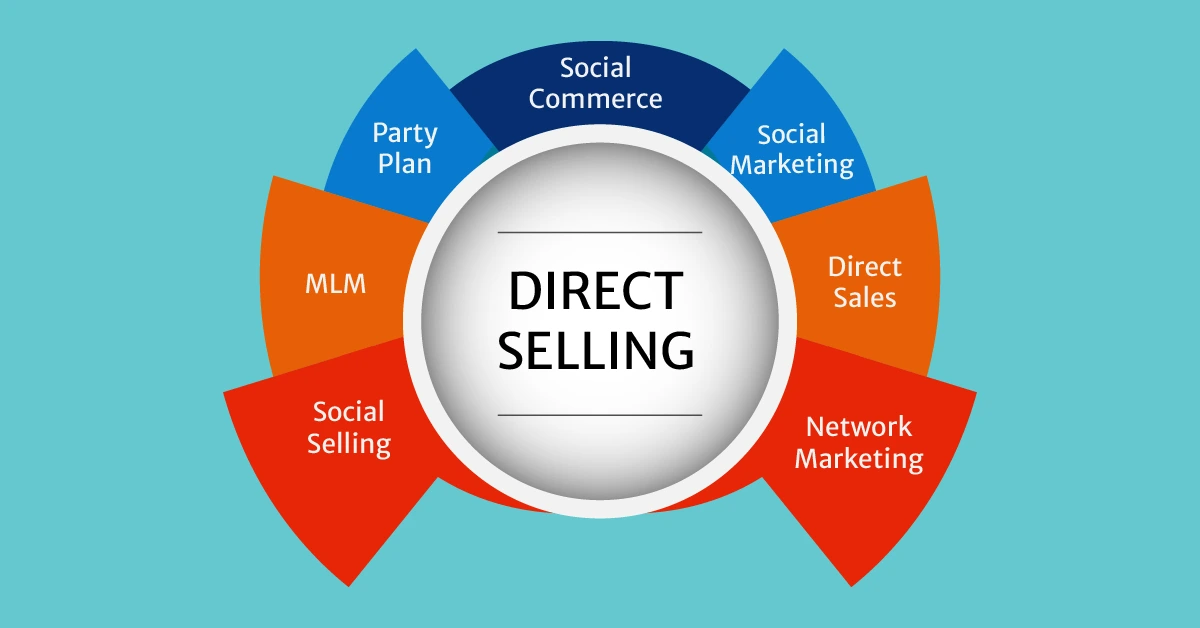
Direct selling targets customers one-to-one—sales reps, D2C e-commerce with personalized outreach, or social selling. It’s high-touch and works well for complex or high-value products.
Mass Marketing
Mass marketing uses one large message to reach a broad audience (TV, radio, broad display). It is useful for commodities or when brand awareness at scale is the main objective.
Which to Choose?
| Criteria | Direct Selling | Mass Marketing |
|---|---|---|
| Best for | High-value, complex products | Commodities, brand awareness |
| Cost | Higher per-customer | Lower per-reach |
| Personalization | High | Low |
Digital Marketing & Brand Awareness
Social Media Marketing Services
Social media amplifies brand stories and enables targeted campaigns. Core services include content creation, community management, paid social ads, and influencer partnerships. Use platform analytics to refine audiences and creative.

Awareness Campaigns: Objectives & Measurement
- Objectives: reach, impressions, brand lift.
- Channels: social, display, video, search (for top-funnel queries).
- Metrics: viewability, share of voice, aided brand recall, CTR for landing pages.
Google Market & Search Strategies
Google remains central for demand capture—use a mix of SEO, branded search campaigns, and shopping ads. Align content to search intent: informational for awareness, transactional for conversions. Use structured data (FAQ schema) to increase SERP real estate.
Practical Channel Mix Example
For a mid-sized brand launching a new product:
- Phase 1 (Awareness): Video + influencer + display
- Phase 2 (Consideration): SEO content, retargeting, email sequences
- Phase 3 (Conversion): Search ads, product pages, promotions
Scope & Future of Marketing
The Expanding Role of Marketing in Modern Businesses

The role of marketing has expanded far beyond promotion. Today, marketing teams drive product development, customer success, analytics, and overall business growth. Modern marketing leaders collaborate closely with sales, product, and operations to shape decisions related to pricing, customer retention, brand positioning, and even R&D.
By continuously gathering and analyzing customer insights, marketing now provides the strategic direction companies need to stay competitive in fast-changing markets.
Marketing in International Markets
For international marketing groups, local adaptation is critical—translate messaging, adjust offers for local price sensitivity, and respect cultural nuances. Use local partners and country-level analytics.
Future Trends
- AI-driven segmentation—dynamic groups based on real-time behavior.
- Hyper-personalization—messages tailored to individual moments.
- Privacy-first targeting—cookieless solutions and first-party data.
- Experience marketing—focus on customer outcomes and community.
Conclusion: Build Your Complete Marketing Strategy
Start with clear market analysis, segment your audience, choose the most promising target groups, and position your product using STP. Use the 4P → 5P → 7Ps framework to make operational decisions and the Boston Matrix to prioritize your product portfolio. Combine these classic frameworks with digital tactics—social, search, and data—to measure and scale. Action checklist below helps you start quickly.
Action Checklist (30/60/90 days)
- 30 days: Market audit, segmentation, and one validated target persona.
- 60 days: Test positioning with landing pages and small ad budgets.
- 90 days: Scale winning segments, allocate budget via Boston Matrix insights, and setup retention workflows.
What is the difference between 4Ps and 7Ps?
4Ps focus on product, price, place, promotion—ideal for product marketing. 7Ps adds People, Process, and Physical Evidence for service and experience businesses. Use 7Ps when human interactions and customer journeys matter more.
How do I decide which segment to target first?
Score segments by size, growth, expected lifetime value, and cost to acquire. Run quick pilots to validate. Choose the segment with the best return potential and strategic fit.
Can small businesses use the Boston Matrix?
Yes. Even small portfolios (3–5 SKUs) benefit from categorizing offerings to decide where to invest or optimize. Use simplified metrics like % revenue mix and growth rate.
Should I always choose digital channels for awareness?
Digital channels are cost-efficient and measurable but combine with offline channels when reaching broad, mass audiences or local communities. The right mix depends on your target market.