ChatGPT Ads: The Complete Guide to OpenAI's Revolutionary Advertising Platform
Table of Contents
The ChatGPT Advertising Revolution is Here
On January 16, 2026, OpenAI made a watershed announcement that fundamentally transformed the digital marketing landscape. OpenAI officially announced plans to begin testing ads in the U.S. for free and Go tier users, marking the official launch of ChatGPT ads—a revolutionary advertising platform that reimagines how brands connect with consumers through conversational artificial intelligence.
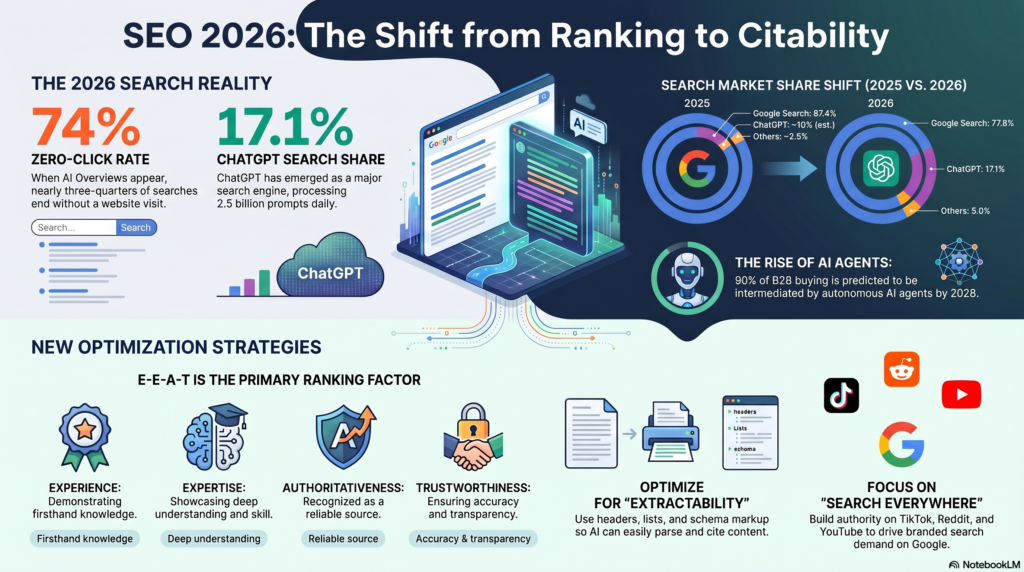
With ChatGPT commanding 800 million weekly active users and penetrating 34% of the U.S. adult population, the stakes for advertisers have reached unprecedented levels. Unlike traditional keyword-based search advertising, ChatGPT ads represent a paradigm shift toward what industry analysts call the "Answer Economy"—where conversational AI replaces search engines as the primary mechanism through which people discover solutions, make purchasing decisions, and solve problems.
Key Context: EMarketer projects AI-driven search advertising spending will surge from $1.1 billion in 2025 to $26 billion by 2029, a 23-fold increase representing fundamental market restructuring.
What Exactly Are ChatGPT Ads?
ChatGPT ads are sponsored content appearing at the bottom of answers when relevant products or services match your current conversation. These aren't intrusive banner advertisements or pop-ups. Instead, they function as "Sponsored Recommendations"—clearly labeled, contextually relevant suggestions that appear only after ChatGPT has provided its complete organic response.
The elegance of this approach lies in its subtlety and user trust preservation. Advertisements will never influence ChatGPT's core responses and appear in separate, clearly marked sections below the chatbot's answer. This critical distinction protects the fundamental value proposition that made ChatGPT popular: users' confidence that the AI prioritizes their interests above advertiser interests.
Official Launch Details: What's Happening Right Now in February 2026
Rollout Timeline and Availability
OpenAI is executing a deliberate, phased rollout strategy beginning with closed beta testing in the U.S. for logged-in adult users during the free and Go tier access windows. The testing phase, which commenced in late January 2026 and continues through February, represents a critical data-collection period allowing OpenAI to validate ad quality, user experience impact, and performance metrics before broader expansion.
This conservative approach reflects lessons learned from previous AI advertising experiments that failed due to inadequate user trust preservation. By limiting initial access to vetted advertisers and closely monitoring performance, OpenAI mitigates risks to its core platform value proposition.
Which Users Will See Ads? The Subscription Tier Strategy
This distinction proves critically important for users and advertisers alike: Premium subscribers on Pro, Business, and Enterprise plans will not encounter advertisements. OpenAI has made an explicit public commitment maintaining ad-free experiences for paying subscribers, signaling that premium tier customers represent a protected audience segment deserving distraction-free AI interactions.
Conversely, ads will appear in two specific tiers: the completely free ChatGPT tier and ChatGPT Go (at $8/month). This three-tier monetization structure reflects sophisticated audience segmentation:
- Free Tier: Ads included, limited features
- Go Tier ($8/month): Ads included, expanded features, GPT-5.2 Instant access
- Plus Tier ($20/month): No ads, enhanced capabilities
- Pro Tier ($200/month): No ads, maximum features
- Business & Enterprise: No ads, full team collaboration
OpenAI's Five Core Principles for ChatGPT Ads
OpenAI has established explicit governance principles specifically designed to address why previous AI advertising attempts failed while maintaining platform integrity and user trust preservation.
Principle 1: Responses Remain Independent
ChatGPT's responses are driven exclusively by objective utility, never by advertising considerations. Advertisers cannot pay to have their products mentioned within ChatGPT's organic answers. The ad appears separately, below the response, never influencing the core content.
Principle 2: Choice and Control
Users control how their data is used. Personalization can be disabled. Data used for ads can be cleared at any time. OpenAI commits to always providing ad-free options, including paid tiers that guarantee zero advertisement exposure.
Principle 3: Privacy-First Data Handling
OpenAI will never sell user data to advertisers. Sponsored content cannot influence organic answer generation. Users' complete conversation histories remain confidential. Advertisers receive only aggregate performance data, never individual user information.
Principle 4: Contextual Targeting Without Data Sales
Conversation topics are matched to relevant advertising using conversation context and optional personalization data (which users can disable independently). Advertisers see only aggregate metrics: impression counts, click rates, engagement data. OpenAI will not share conversation content, age, location, or interest profile information.
Principle 5: Topic Restrictions on Sensitive Content
Advertisements are prohibited from appearing near sensitive or regulated topics. During current testing, OpenAI will not display ads in accounts where users are predicted to be under 18 years old, acknowledging the responsibility inherent in monetizing a platform with such broad demographic reach.
The Economics Behind ChatGPT Ads: Why OpenAI is Monetizing Now
Understanding OpenAI's Financial Pressure
Internal OpenAI financial documents obtained by multiple sources reveal the company forecasting $1 billion in annual revenue from "free user monetization" in 2026, accelerating to nearly $25 billion by 2029. This represents not speculative thinking but fundamental business necessity. OpenAI currently generates $3.5-$4.5 billion annually while spending over $8.5 billion, posting projected losses of $5 billion over the next 12 months.
The mathematics are unforgiving: without successful free user monetization, OpenAI cannot sustain its infrastructure investments in frontier artificial intelligence development. ChatGPT ads represent a critical path to financial sustainability.
The Broader Market Opportunity
Market research firm eMarketer projects that AI-driven search advertising spending in the United States will experience explosive growth from approximately $1.1 billion in 2025 to $26 billion by 2029. This 23-fold increase over four years reflects fundamental restructuring in how consumers search and discover information. These projections aren't optimistic estimates—they're derived from observable consumer behavior shifts toward AI-powered discovery.
Market Reality: 56% of U.S. consumers already use AI chatbots to compare prices and find deals. 19% of all buyers and 25% of new vehicle buyers use AI websites for research. The market is already shifting.
How ChatGPT Ads Work: The Conversational Advertising Framework
Understanding the mechanics of ChatGPT advertising requires recognizing how it fundamentally differs from traditional search advertising models established over the past two decades.
The User Journey
- User asks a question: "What project management tool works best for remote teams with 15+ members?"
- ChatGPT provides organic response: Comprehensive analysis comparing industry-leading solutions with technical specifications
- Sponsored recommendation appears: Clearly labeled ad below the answer, contextually relevant to the user's stated need
- User has complete choice: Click to engage with the brand, dismiss the ad, or provide feedback on relevance
- Interactive conversation: If clicked, users can chat directly with the brand's conversational interface
What Makes This Different from Traditional Search Ads
Traditional search advertising (Google, Bing) operates on keyword matching mechanics. Users search specific keywords, advertisers with highest bids display ads. Success depends on keyword competition and bid strategy. ChatGPT ads function fundamentally differently. The AI understands complete conversational context rather than isolated keywords, enabling more precise intent matching and relevance scoring. Instead of competing on keywords, advertisers compete on solution relevance to the specific conversation.
| Factor | ChatGPT Ads | Google Ads | Meta Ads |
|---|---|---|---|
| Matching Type | Contextual/Conversational | Keyword-Based | Behavior-Based |
| User Intent | Full conversation context | Search query only | Inferred from behavior |
| Ad Format | Sponsored recommendation | Search result listing | Social feed placement |
| User State | Active information seeking | Active searching | Passive scrolling |
| Typical CTR | 2-5% (estimated) | 1-3% | 0.5-2% |
ChatGPT Ads Pricing and Early Advertiser Requirements
Understanding ChatGPT ads pricing structure proves essential for strategic budget allocation and ROI estimation.
CPM Pricing Structure
ChatGPT ads operate on an impression-based cost model at approximately $60 per 1,000 impressions (CPM), substantially higher than Meta's typical $20-$25 rates, with minimum commitments around $1 million required for early advertiser program participation. This premium pricing reflects several underlying realities:
- Premium inventory: 800 million weekly active users represent exceptionally high-value audience access
- High-intent users: ChatGPT users actively seek information, not passively scrolling
- Quality metrics: Contextual relevance produces higher engagement than traditional display advertising
- Early-stage premium: Initial advertisers pay premium for market positioning and algorithm training access
Initial Advertiser Pool and Timeline
OpenAI deliberately limits initial advertiser access. The $1 million spending commitment effectively restricts early participation to established brands and companies with significant advertising budgets, enabling controlled platform testing and gradual expansion. Based on historical platform launches, expect expansion timeline: Q1 2026 closed beta (current phase), Q2 2026 mid-market expansion ($250K-$1M budgets), Q3/Q4 2026 broader access with tiered pricing, and 2027 small business program introduction.
Budget Math: $1 million at $60 CPM = 16.7 million impressions. With estimated 2-5% CTR = 334K-835K clicks. Plan for 3-6 months optimization before mature performance data.
Best Practices for ChatGPT Ads Success
Creative Strategy: Writing Conversational Ads
ChatGPT ads creative strategy differs fundamentally from traditional advertising approaches. Conventional search ad copy emphasizes urgency and action calls. ChatGPT ads should read like helpful advice, addressing specific user contexts and problems directly.
Example Traditional Ad: "Enterprise Project Management Software - Free Trial Today - 50% Off"
Example Conversational Ad: "For distributed teams with complex dependencies, robust communication tools prevent timeline slippage while maintaining context across time zones"
Effective ChatGPT ad principles include: reading like helpful advice rather than promotional copy, addressing specific conversation contexts, providing utility before requesting action, using natural conversational tone, and inviting engagement rather than demanding immediate clicks.
Targeting Strategy: Leveraging Contextual Intent
Since OpenAI doesn't monetize through personal data sales, effective targeting relies on conversation context matching. Develop targeting approaches around: topic-based targeting (run ads when users discuss your solution category), problem-based targeting (appear when users describe problems your product solves), research-phase targeting (target "how to" and comparison questions), implementation-phase targeting (target "best tools for" and "how do I set up" questions).
Data Infrastructure Preparation
Prepare your marketing technology stack now: centralize analytics across all advertising platforms, implement proper UTM parameter tracking, set up event tracking in analytics platforms, connect CRM systems to marketing infrastructure, and build unified cross-platform reporting dashboards. Marketers with centralized reporting will integrate ChatGPT advertising in days rather than months.
ChatGPT Ads vs. Competing AI Advertising Platforms
ChatGPT ads aren't operating in isolation. Competitors are developing their own AI advertising infrastructure:
Google Gemini Ads (2026): In December 2025, Google informed advertisers of plans to bring advertisements to Gemini in 2026, marking the company's official entry into AI advertising. Exact format and pricing remain undisclosed.
Perplexity AI Ads: Perplexity, an AI search engine, is developing advertising capabilities targeting high-intent research users.
Claude/Anthropic (Future): Anthropic has not announced advertising plans for Claude, but industry speculation suggests potential future development.
| Factor | ChatGPT | Gemini | Perplexity |
|---|---|---|---|
| User Base | 800M weekly | 1B+ across Google | 100M+ monthly |
| Ad Testing | Live (Feb 2026) | Planned (2026) | TBD |
| CPM | $60 | TBD | TBD |
| Min. Spend | $1 million | TBD | TBD |
| Brand Trust | Very High | High | Emerging |
Frequently Asked Questions (FAQs)
OpenAI is testing ads starting February 2026 for logged-in adults in free and Go tiers. Currently, access requires a minimum $1 million advertising budget and direct OpenAI sales team contact. Most brands should prepare infrastructure now and anticipate access by Q2-Q3 2026. Full public availability will expand through 2026-2027.
ChatGPT ads are conversation-based and contextual, appearing as helpful suggestions below answers. Google Ads are keyword-based search results. ChatGPT ads excel at high-intent users actively evaluating solutions, while Google drives volume and awareness. Strategic recommendation: Use both platforms. ChatGPT for high-intent conversion, Google for broad reach and awareness building.
OpenAI will never sell your data to advertisers. You control data personalization and can clear ad data anytime. Advertisers see only aggregate metrics and conversation topics that triggered their ads,never your identity, age, location, interests, or conversation content. This privacy-first approach directly differentiates ChatGPT from Meta and Google.
ROI depends on business model. SaaS companies: 3:1-10:1 ROAS typical. E-commerce: 2:1-5:1 depending on margins. Services: 5:1-20:1 due to high-value conversions. Budget example: $1 million at $60 CPM generates ~16.7 million impressions. At 2-5% CTR = 334K-835K clicks. Expect 3-6 months optimization before mature ROI data emerges.
Begin preparation immediately:
(1) Implement Google Tag Manager for centralized tracking,
(2) Integrate all advertising platforms (Google, Meta, LinkedIn),
(3) Set up event tracking in analytics,
(4) Connect CRM to marketing infrastructure,
(5) Build unified cross-platform reporting dashboards,
(6) Develop conversational creative approach,
(7) Audit messaging for ChatGPT alignment,
(8) Plan budget allocation strategy. Prepared teams integrate ChatGPT advertising in days, not months.
Conclusion:
The transition from the "Search Economy" (keyword-based discovery) to the "Answer Economy" (conversation-based discovery) represents the most significant shift in digital marketing since Google's paid search revolution in 2002. Just as companies that mastered Google Ads in 2002-2005 built competitive moats and industry dominance, companies that master ChatGPT ads in 2026-2027 will define their industries and categories.
ChatGPT ads represent the bridge between artificial intelligence and human commerce. They acknowledge a fundamental truth: people use ChatGPT for consequential decisions, discovering solutions, and solving critical problems. Brands that understand this conversational shift will thrive in the AI-driven economy.
Strategic imperatives for 2026: Prepare marketing infrastructure immediately without waiting for full platform access. Develop conversational creative strategy recognizing that repurposed search ads won't succeed. Allocate strategic budget ($500K-$2M) for competitive positioning. Build cross-platform measurement understanding how ChatGPT fits your complete marketing funnel. Train teams on conversational AI marketing because this fundamentally changes how marketing operates.
The future of advertising is conversational. The future is now. The time to prepare is this moment.